Why Gardeners Use Gypsum in Their Soil
When you talk to experienced gardeners or farmers, you will often hear someone mention adding gypsum to their soil. It’s a simple, natural mineral that has been used in agriculture for generations to improve soil conditions and support healthy plant growth.
But what exactly does gypsum do, and when should it be used in a garden?
In simple terms, gypsum helps improve the structure of the soil, especially in areas with heavy clay. Clay soils tend to pack tightly together, making it difficult for water to drain and for plant roots to grow freely. When gypsum is added, it helps loosen the soil over time, allowing better water movement and creating small air pockets that roots need to thrive.
Gypsum also provides an important plant nutrient: calcium. Calcium plays a key role in plant health by helping build strong cell walls and supporting root development. Because gypsum adds calcium without significantly changing the soil’s pH, it can be a useful amendment for gardens where the pH is already balanced but the soil could still benefit from improved structure and additional nutrients.
What Is Gypsum?
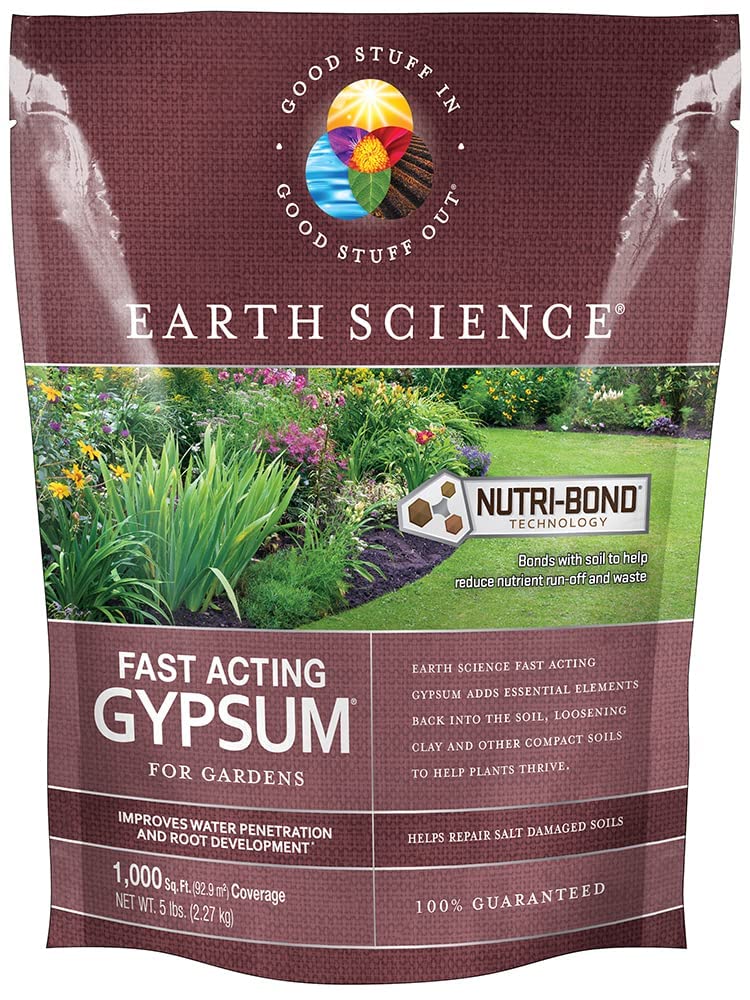
Gypsum is a naturally occurring mineral called calcium sulfate. In gardening and farming, it is commonly sold as a granular or powdered soil amendment that can be spread over garden beds or fields.
Unlike some other soil amendments, gypsum does not dramatically change soil chemistry. Instead, it works mostly by improving the physical structure of the soil while also supplying plants with an important nutrient: calcium.
Improving Heavy Clay Soil
One of the biggest benefits of gypsum is its ability to help improve heavy clay soil. In many areas, including much of the southeastern United States, soil contains a high percentage of clay. Clay particles are very small and tend to pack tightly together.
When this happens, soil can become:
- Hard and compacted
- Poorly drained
- Difficult for plant roots to grow through
Gypsum helps clay particles separate and form better soil structure, which allows water to drain more effectively and creates small air pockets that roots need to grow.
Supplying Calcium to Plants
Gypsum is also a source of calcium, an essential nutrient for plant development. Calcium plays a key role in building strong cell walls and supporting healthy root systems.
Some crops, especially tomatoes and peppers, can suffer from problems such as blossom end rot, which is often linked to calcium availability. Adding gypsum can help supply calcium without dramatically altering the soil’s chemistry.
It Doesn’t Change Soil pH
Another important characteristic of gypsum is that it does not significantly change soil pH. This is different from lime, which raises soil pH and makes soil more alkaline.
Because gypsum leaves pH mostly unchanged, it can be used in gardens where the soil pH is already in a good range but additional calcium is still beneficial.
Helping With Sodium in Soil
In some situations, soil can accumulate excess sodium from irrigation water or fertilizers. Too much sodium can damage soil structure and make it difficult for plants to grow.
Gypsum can help replace sodium with calcium, allowing the sodium to be washed out of the soil with rainfall or irrigation.
When Gypsum May Not Help
While gypsum has many benefits, it is not a miracle solution for every garden. If soil already has good structure and adequate calcium, adding gypsum may have little effect.
The best way to determine whether gypsum will help is to start with a soil test. This provides valuable information about nutrient levels, soil structure, and pH.
A Simple Tool for Better Soil
Good soil is the foundation of every successful garden. Whether you are growing vegetables in a backyard bed or managing a larger farm, improving soil health always pays off in the long run.
Gypsum is one of those simple tools that can quietly make a difference over time. By improving soil structure and supplying calcium, it helps create the kind of environment where plant roots can grow deep and crops can thrive.