
Victory Gardens: When America Grew Its Own Food 🌱🇺🇸
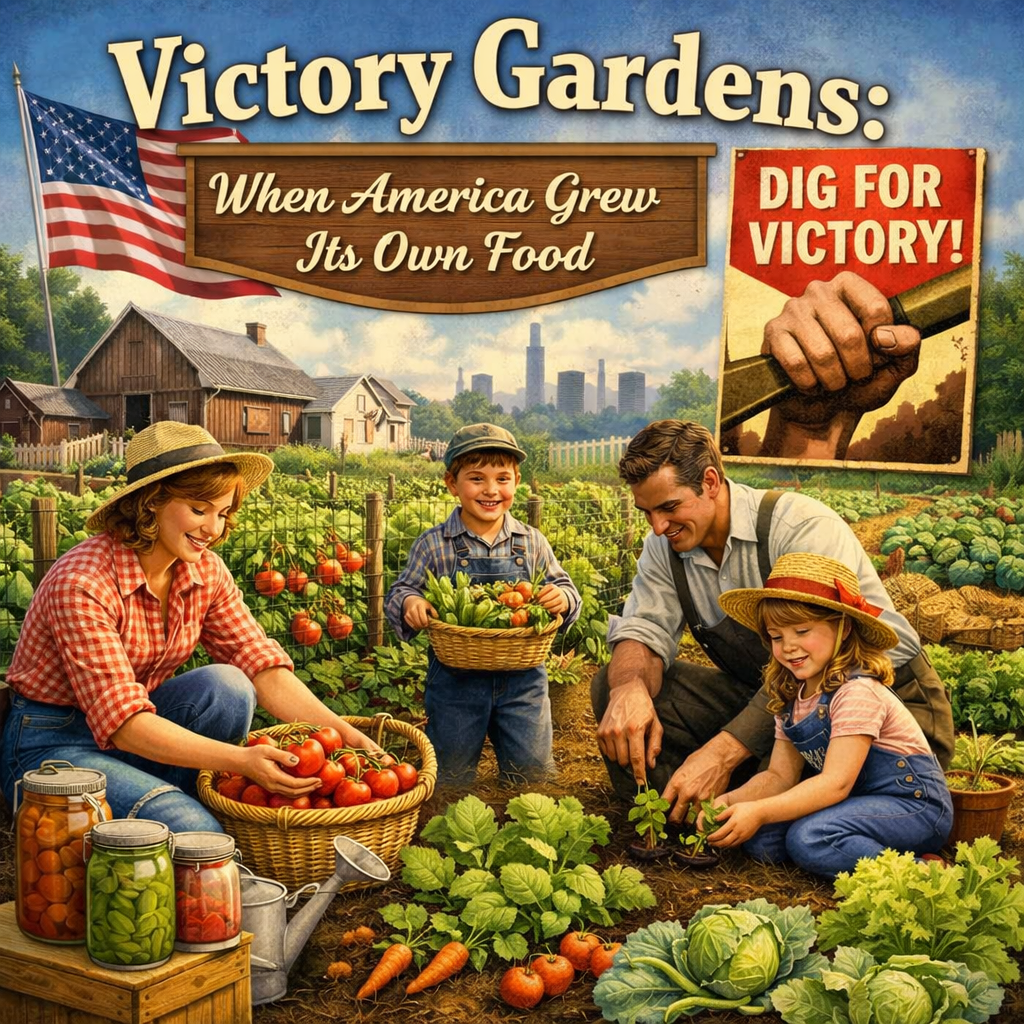
When you walk through a farm field today—whether it’s strawberries, vegetables, or a backyard garden—it can feel simple and peaceful. But there was a time in American history when growing food at home was more than a hobby. It was considered a patriotic duty.
During both World War I and World War II, millions of Americans planted what became known as Victory Gardens. These gardens helped feed families, supported the war effort, and reminded people that even small acts at home could make a national difference.
Across the country, backyards, empty city lots, schoolyards, and even rooftops were turned into productive gardens. Families grew vegetables like tomatoes, beans, carrots, and potatoes—foods that were easy to grow and could feed households throughout the season. Many families also learned to can and preserve their harvest so the food would last through the winter months.
Why Victory Gardens Started
When the United States entered World War I in 1917, much of the nation’s agricultural production had to be redirected toward feeding soldiers and supporting allied countries overseas. At the same time, many farm workers had left for military service.
To help fill the gap, the government encouraged citizens to grow food themselves. The United States National War Garden Commission launched a nationwide campaign urging Americans to plant vegetables anywhere they could.
Vacant lots, schoolyards, parks, and backyards quickly turned into small farms.
People didn’t just grow food—they became part of the solution.
The Victory Garden Boom During WWII
The idea returned even stronger during World War II. By the early 1940s, the government again encouraged Americans to plant gardens to reduce pressure on the commercial food supply.
The results were remarkable.
By 1943:
- Over 20 million Victory Gardens were planted across the United States
- Nearly 40% of the country’s vegetables were grown in home gardens
- Families were encouraged to can and preserve their harvests for winter
Victory Gardens appeared everywhere—behind homes, beside factories, in schoolyards, and even on rooftops in major cities.
First Lady Eleanor Roosevelt famously planted a garden on the grounds of the White House Victory Garden, helping inspire Americans across the country to do the same.
What People Grew
Victory Gardens focused on practical vegetables that produced well and stored easily.
Common crops included:
- Tomatoes
- Beans
- Peas
- Carrots
- Cabbage
- Beets
- Potatoes
- Lettuce
Families learned how to can vegetables, pickle produce, and store root crops, ensuring their gardens could feed them throughout the year.
For many children growing up during the war, working in the garden was a daily part of life.
More Than Just Food
Victory Gardens did more than fill dinner plates.
They created:
Community pride
Neighbors shared seeds, tools, and gardening advice.
A sense of purpose
People felt they were actively helping the war effort.
A deeper connection to the land
Families learned firsthand how food is grown and harvested.
Even people living in cities discovered the satisfaction of watching something grow from the soil.
The Legacy of Victory Gardens
After the war ended, grocery stores once again became the primary source of food for most Americans, and Victory Gardens gradually faded away.
But the spirit behind them never really disappeared.
Every backyard garden, community garden, and local farm still carries that same idea—that food is something we can grow, share, and appreciate together.
In many ways, today’s renewed interest in local farms, farmers markets, and pick-your-own produce reflects the same values that fueled Victory Gardens generations ago.
Bringing the Idea Back
There is something special about harvesting food with your own hands. Whether it’s pulling a carrot from the soil, picking tomatoes from a backyard vine, or filling a bucket with fresh strawberries, it connects us to something deeper than a grocery store shelf.
Victory Gardens reminded Americans that food doesn’t just appear—it’s grown with care, patience, and hard work.
And sometimes, the smallest garden can make the biggest difference.